
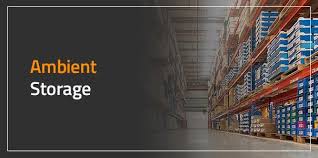
In the world of logistics and supply chain management, not every product requires refrigeration or freezing. In fact, the majority of goods—from canned foods and dry goods to construction materials, textiles, electronics, and pharmaceuticals that are stable at room temperature—thrive in Ambient Storage. Ambient storage refers to warehousing facilities that maintain natural, uncontrolled indoor temperatures that reflect the external climate, typically ranging from 15°C to 30°C, with relative humidity between 30% and 65%. While these facilities do not actively cool or heat the space, they provide essential protections: shelter from rain and direct sunlight, ventilation to prevent condensation, pest control measures, and structural integrity to prevent water ingress. For businesses seeking cost-effective, scalable storage for non-perishable inventory, professional ambient storage offers the perfect balance of protection and affordability. However, in Saudi Arabia’s extreme climate, ambient storage requires deliberate engineering—cool roofs, insulation, dust filtration, and strategic ventilation—to ensure products remain safe and undamaged.
Ambient Storage in Jeddah
Jeddah, Saudi Arabia’s bustling port city on the Red Sea, presents a unique set of challenges for Ambient Storage in Jeddah. Unlike the dry heat of Riyadh, Jeddah experiences high humidity year-round, with coastal fog and occasional rainfall. This moisture-rich air can cause cardboard packaging to weaken, metal components to rust, and labels to peel. Professional ambient storage in Jeddah must therefore prioritize humidity management. Facilities use passive dehumidification strategies such as vapor barriers in floors and walls, proper drainage around the building perimeter, and strategic ventilation timing to avoid peak humidity hours. Additionally, Jeddah’s salt-laden air accelerates corrosion on metal racking and building components, requiring marine-grade coatings or regular maintenance. For businesses operating in Jeddah—from food importers and textile distributors to electronics retailers and construction material suppliers—choosing an ambient storage provider with local expertise is essential. The best facilities offer dust filtration, positive air pressure to keep unfiltered air out, and real-time humidity monitoring. With Jeddah serving as the entry point for goods destined for Makkah, Madinah, and beyond, reliable ambient storage ensures your inventory remains undamaged and ready for distribution.
Ambient Storage in Dammam
Dammam, the capital of Saudi Arabia’s Eastern Province and a major Gulf port city, presents a hybrid challenge for Ambient Storage in Dammam. The city experiences both high summer temperatures (often exceeding 45°C) and periodic Gulf humidity, plus salt-laden air from the nearby sea. Ambient storage facilities in Dammam must therefore address multiple threats: heat, moisture, and corrosion. Professional facilities employ cool-roof technology with high-albedo coatings to reflect solar radiation, insulated sandwich panels to slow heat transfer, and strategic ventilation with ridge vents and turbo extractors. Dust filtration is critical, as the Eastern Province can experience sandstorms. For businesses serving the Eastern Province—from industrial parts suppliers and automotive distributors to food wholesalers and e-commerce fulfillment centers—professional ambient storage provides secure, accessible, and cost-effective inventory protection. Dammam’s proximity to Bahrain and the Gulf Bridge also makes it a transshipment hub for goods moving to other GCC countries. Ambient storage providers in Dammam should offer flexible access hours, real-time inventory tracking via warehouse management systems, and scalable space for seasonal fluctuations. With the Eastern Province’s economy growing rapidly, investing in professional ambient storage is essential for operational efficiency.
Units: Your Trusted Ambient Storage Partner
When your business requires ambient storage that is secure, accessible, and tailored to Saudi conditions, one name leads the market: Units. As the top company for ambient storage solutions across the Kingdom, Units operates state-of-the-art facilities in Jeddah, Dammam, and Riyadh. Every Units ambient storage facility features cool-roof technology with high-albedo coatings reflecting up to 85% of solar radiation, insulated sandwich panels (80mm+ polyurethane core), strategic ventilation, and dust filters on all intake points. Security is comprehensive: 24/7 CCTV coverage, biometric access control, and perimeter fencing. Clients receive access to a cloud-based warehouse management system for real-time inventory visibility, low-stock alerts, and pick-list generation. Units serves a wide range of industries: food and beverage, retail and e-commerce, construction materials, automotive parts, textiles, electronics, and pharmaceuticals. With flexible month-to-month contracts, surge capacity for seasonal peaks, and value-added services like pick-and-pack and last-mile delivery coordination, Units delivers ambient storage that drives business efficiency. Visit their website at units.sa to schedule a facility tour, request a quote, or speak with an ambient storage specialist. With Units, your ambient goods are stored safely, organized intelligently, and accessible whenever you need them.
Conclusion
Ambient storage is the workhorse of the logistics industry, protecting the vast majority of goods that do not require temperature control. Ambient Storage provides cost-effective, scalable protection for dry goods, construction materials, textiles, electronics, and more. In the humid port city of Jeddah, Ambient Storage in Jeddah requires enhanced moisture protection and marine-grade corrosion resistance. In the Eastern Province, Ambient Storage in Dammam must handle heat, periodic humidity, and sandstorms. Across all locations, Units stands as the top company, offering professionally managed, technologically advanced, and strategically located ambient storage facilities. Do not trust your non-perishable inventory to substandard warehousing. Visit units.sa today and secure the ambient storage solution your business deserves.
Frequently Asked Questions (FAQs)
1. What products are suitable for ambient storage?
Ambient storage is ideal for canned and jarred foods, dry goods (rice, flour, sugar, pasta), bottled beverages, paper products, cleaning supplies, textiles and clothing, hardware and tools, automotive parts, furniture, construction materials, and many pharmaceuticals that are stable at room temperature (typically below 25°C or 30°C).
2. How does Units protect products from Jeddah’s high humidity?
Units’ Jeddah facility incorporates vapor barriers in floors and walls, proper building drainage, strategic ventilation timing to avoid peak humidity hours, and dust filters on air intakes. Humidity is continuously monitored, and clients receive alerts if levels deviate from acceptable ranges.
3. Does Units offer ambient storage for short-term seasonal needs?
Absolutely. Units understands that many businesses experience seasonal fluctuations—before Ramadan, back-to-school season, or major sales events. Units offers flexible month-to-month contracts with no long-term commitment, allowing you to scale space up or down with 30 days’ notice.
4. How do I access my products stored at Units in Dammam?
Units offers scheduled access during operating hours (Saturday through Thursday, 8:00 AM to 8:00 PM), with after-hours access available by prior arrangement. You can request that Units’ team pick specific items using the WMS portal, or send your own staff with authorized identification.
5. Does Units provide inventory management software with ambient storage?
Yes. Every ambient storage client receives access to Units’ cloud-based warehouse management system (WMS), allowing real-time viewing of inventory levels, product locations, low-stock alerts, and pick-list generation. The system supports barcode scanning, RFID, and API integration with your existing ERP or accounting software.